How people in the past predicted the future, how those predictions turned out, and why they missed, scored item by item against fixed rules, and famous quotations traced back to their sources.
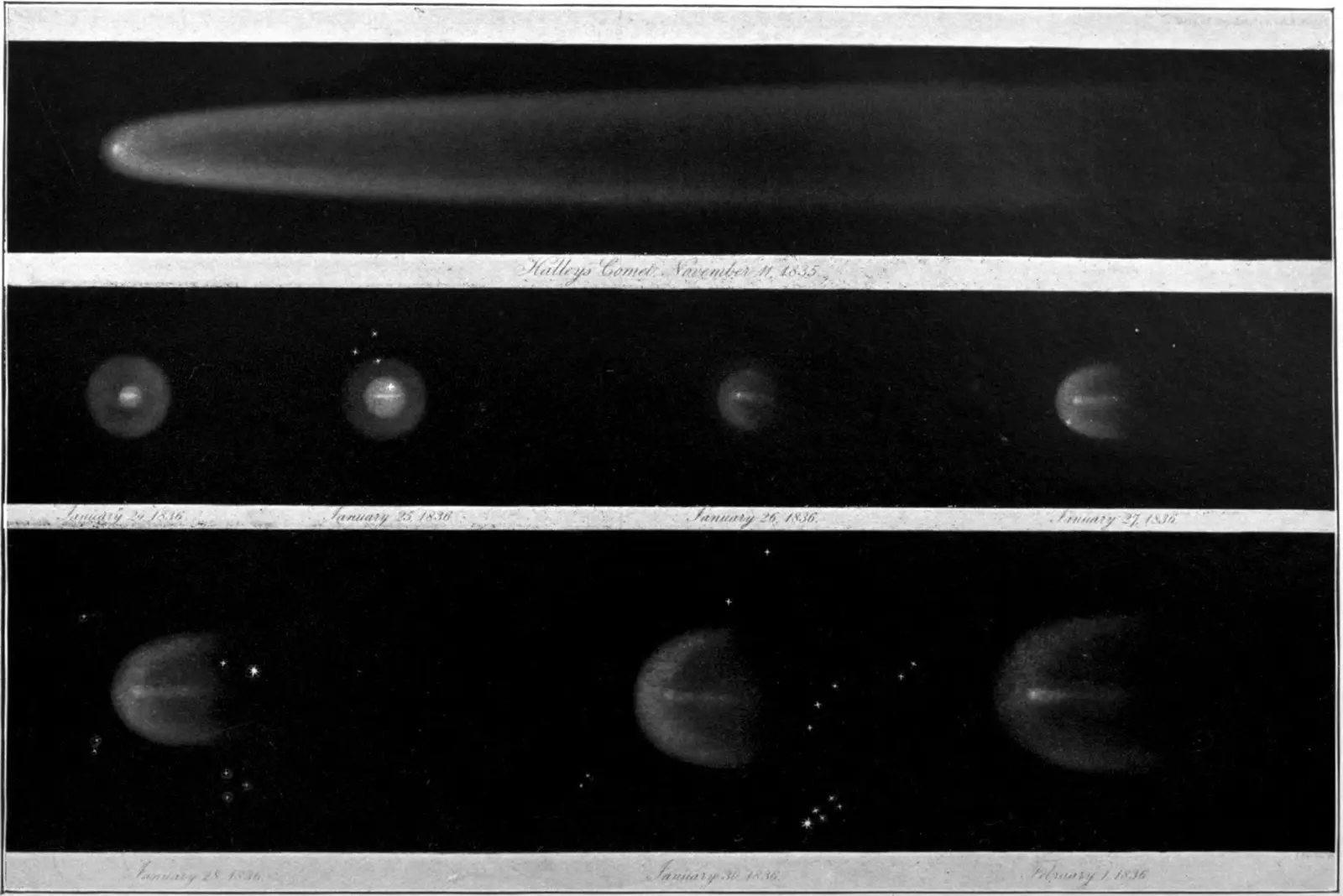
Halley’s Comet: in 1705 Halley wrote it would return in 1758. It was seen on Christmas night 1758, after his death. His forecast, split into 5 claims, scored.
Picture credit
"Halley’s Comet 1835-6 (plate I in The Story of the Comets)" by C. P. Smyth — https://commons.wikimedia.org/wiki/File:The_story_of_the_comets_-_Plate_I.jpg — Public domain (US: published 1909, before 1931 (PD-1923 on Commons). EU: C. P. Smyth died 1900 and George F. Chambers died 1915, both more than 70 years ago; the plate maker is not named and the book was published in 1909, more than 70 years ago. Scan chain: Commons file from en.wikisource Page:The_story_of_the_comets.djvu/6, whose djvu is the University of Toronto (Gerstein Library) scan on the Internet Archive (storyofcometssim00chamuoft).)
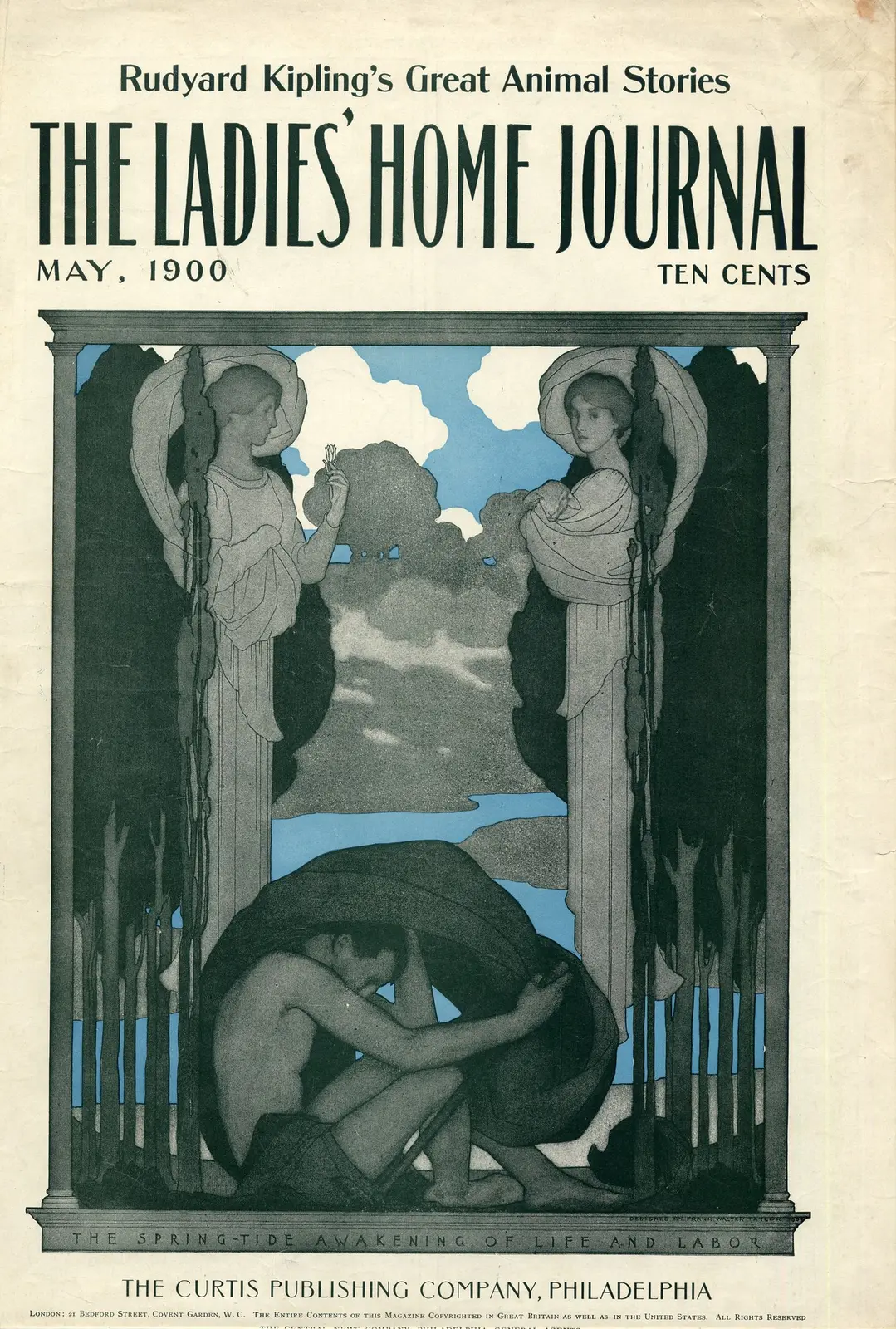
Ladies’ Home Journal 1900 predictions for 2000, split into 68 items and scored: 11 of 48 came true, 27 of 48 counting partial hits; 20 items not scorable.
Picture credit
"The Ladies’ Home Journal, May 1900: The Spring-Tide Awakening of Life and Labor (poster)" by Frank Walter Taylor — https://commons.wikimedia.org/wiki/File:Rudyard_Kipling%27s_Great_Animal_Stories_The_Ladies%27_Home_Journal_May,_1900_-_Ten_cents_The_Spring-Tide_Awakening_of_Life_and_Labor_The_Curtis_Publishing_Company,_Phi,_asset_R2lUHTjMXnRWIWGJgUnisGyp.tif — Public domain (US: published in 1900, before 1931 (public domain). EU: designer Frank Walter Taylor died on July 27, 1921 (date of death 27 July 1921 on the Commons category page F. Walter Taylor, whose infobox is drawn from Wikidata; page archived in the image rights check of 2026-11-05; ULAN 500009621 gives the same years; not confirmed from a printed source), more than 70 years ago; the poster is signed 'designed by Frank Walter Taylor'. Scan chain: Commons file uploaded from the image bank of the city of Antwerp (dams.antwerpen.be asset R2lUHTjMXnRWIWGJgUnisGyp), object held by the Letterenhuis, Antwerp, AV.14.6.54. The poster's own notice of British and American copyright in 1900 has expired.); modified: converted from TIFF to JPEG, scaled from 3,080 x 4,568 to 1,349 x 2,000 px; not cropped (paper edges kept)
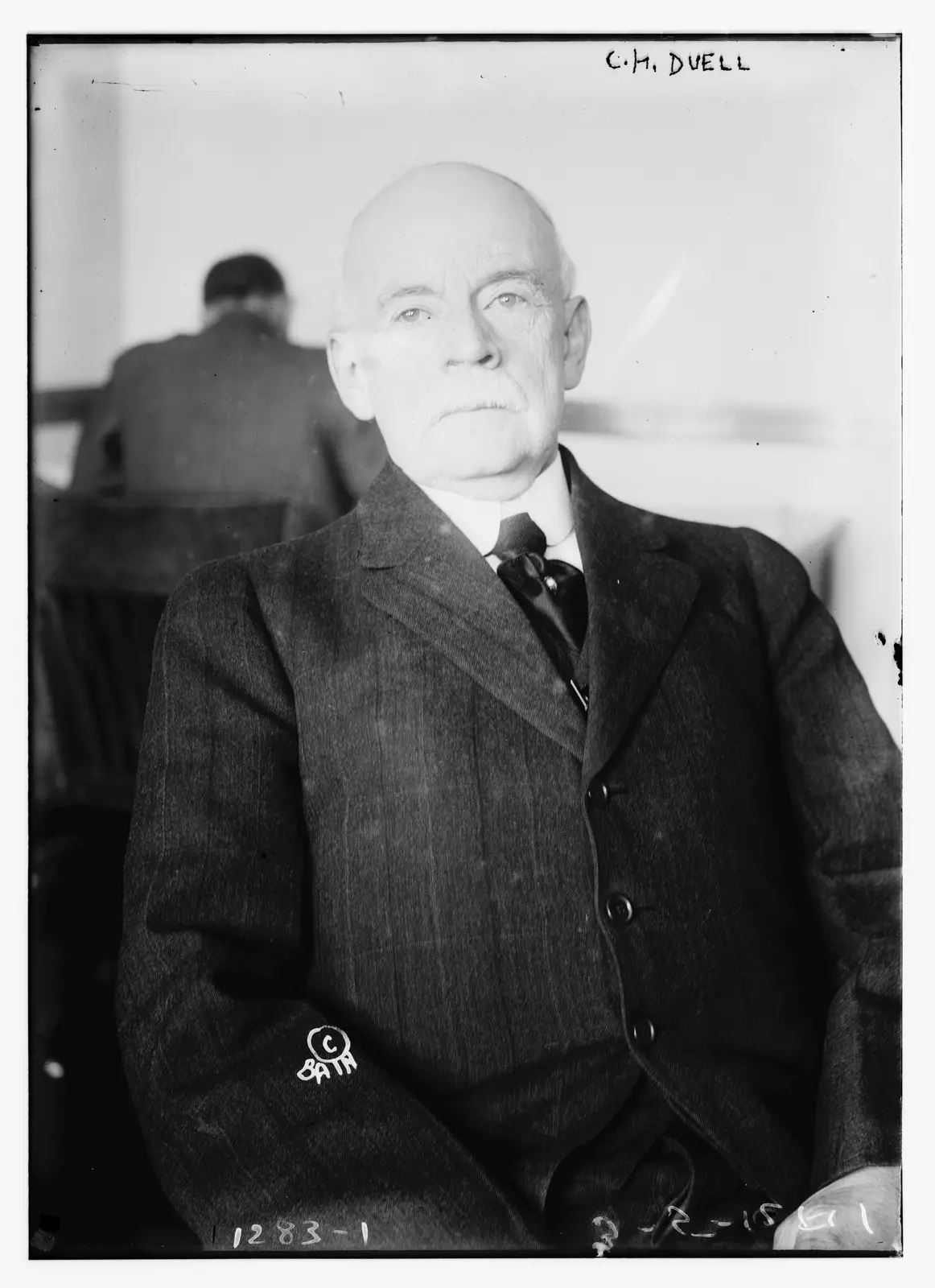
Charles Duell’s Patent Office report for 1899 asks Congress to help inventors. The line is not in its pp. iii–xii; the earliest printing found is a Punch joke.
Picture credit
"C.H. Duell" by Bain News Service — https://commons.wikimedia.org/wiki/File:C.H._Duell_LCCN2014686661.jpg — Public domain (news-agency photograph by the Bain News Service, no named photographer; the negative is marked 3-2-15, read here as March 2, 1915 (Bain negatives are marked month-day-year; the library's date of 1900 is a catalogue placeholder). US: public domain on the ground that Bain distributed its photographs to newspapers when they were taken, which counts as publication, and this was before 1931. Risk: whether this negative was actually distributed in 1915 has not been checked; if it was never published, an anonymous unpublished US work of 1915 is protected until 120 years after creation (end of 2035). EU: anonymous work, 70 years from first making available (or, if never made available, from creation), long expired. Library of Congress Prints and Photographs, George Grantham Bain Collection, ggbain.06669, 'No known restrictions on publication' (a lead, not the basis))
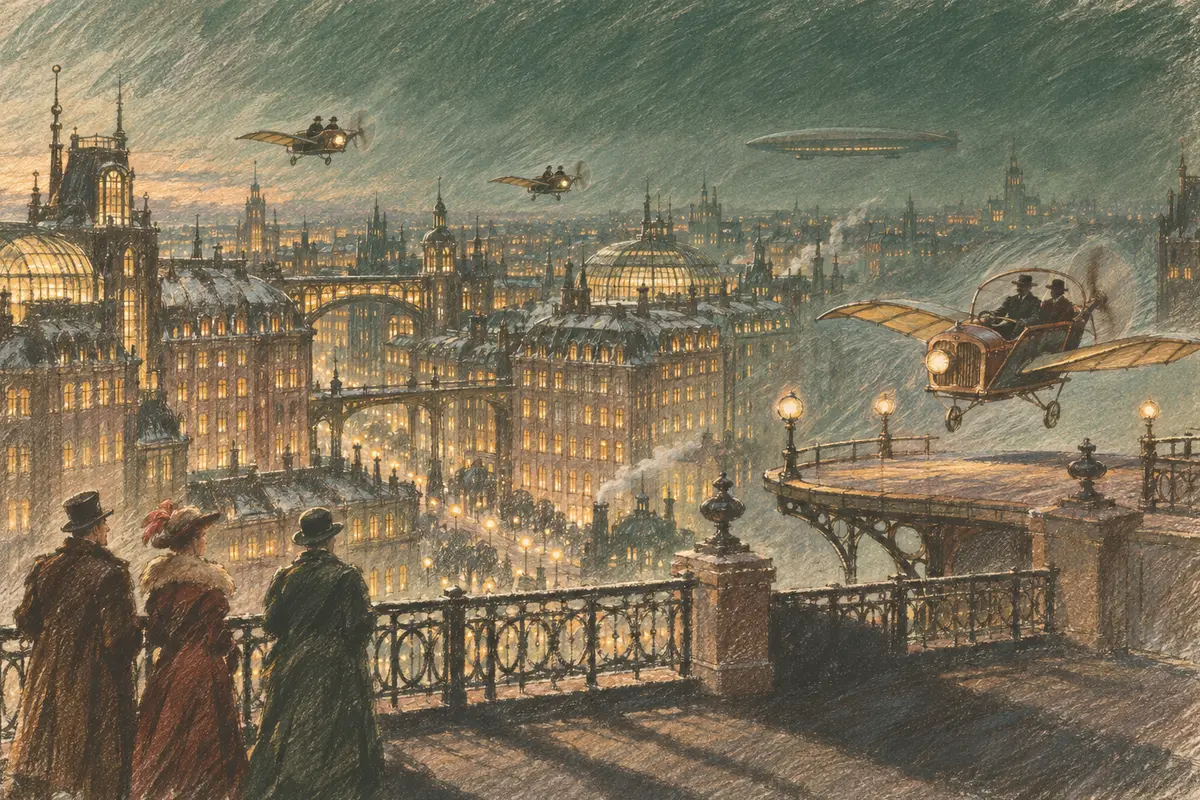
Albert Robida’s La Vie électrique, set in December 1955, split into 27 items and scored: 3 of 9 came true, 6 of 9 with partial hits; 18 are not scorable.
With your permission, this site uses Google Analytics, which sets cookies, to count visits. Cloudflare Web Analytics, which sets no cookies, counts visits either way. There are no ads. Data protection