Historical hoaxes and forgeries that have been settled: how each deception worked and which tests or inquiries exposed it, including settled impostor claims. Settled historical cases only.
The Vinland Map is a forgery, Yale said in 2021: a titanium pigment that went on sale in the 1920s runs through its lines. Key tests from 1965 to 2021.
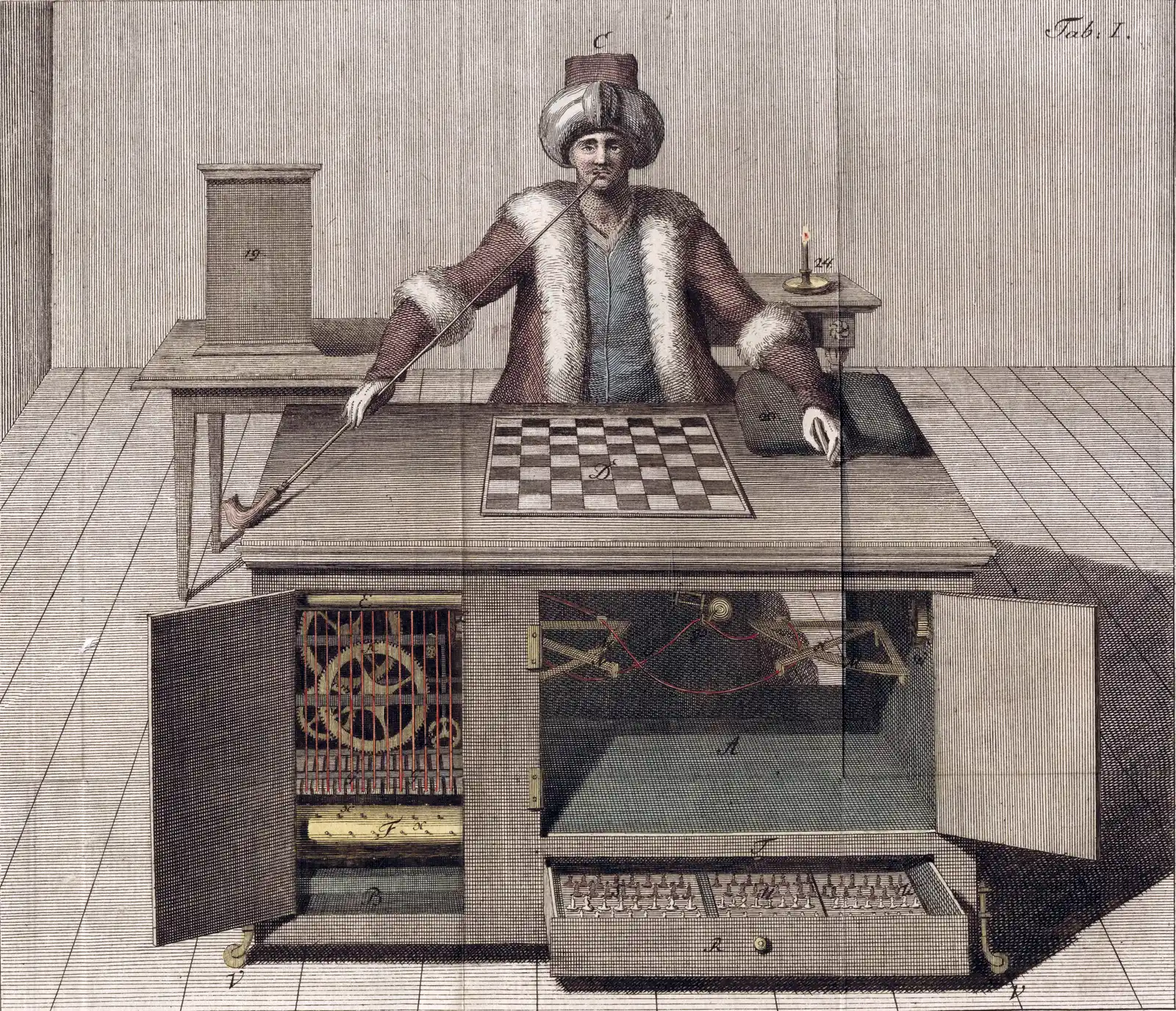
The Mechanical Turk chess automaton hid a human player. Who said so by 1784, what Willis argued in 1821, and why Napoleon’s game rests on later accounts.
Picture credit
"Plate I (Tab. I) of Joseph Friedrich zu Racknitz, Ueber den Schachspieler des Herrn von Kempelen und dessen Nachbildung (1789)" by Joseph Friedrich zu Racknitz — https://commons.wikimedia.org/wiki/File:Racknitz_-_The_Turk_1.jpg — Public domain (engraved plate published in 1789: public domain in the US (published before 1931); in the EU the term has long expired, since the book's author and any engraver working on a plate printed in 1789 died well over 70 years ago (an engraver active in 1789 cannot have lived past 1955); the scan is a faithful photographic reproduction of a two-dimensional public-domain work, which adds no new copyright in the US (PD-Art) or in the EU (Directive (EU) 2019/790, Art. 14); marked Public Domain Mark 1.0 on Commons. Commons gives the source as the Humboldt University Library (digi-hub record BV041097321, scan page 63); that record's own rights field says the copyright status was not checked, which concerns the reproduction only.)
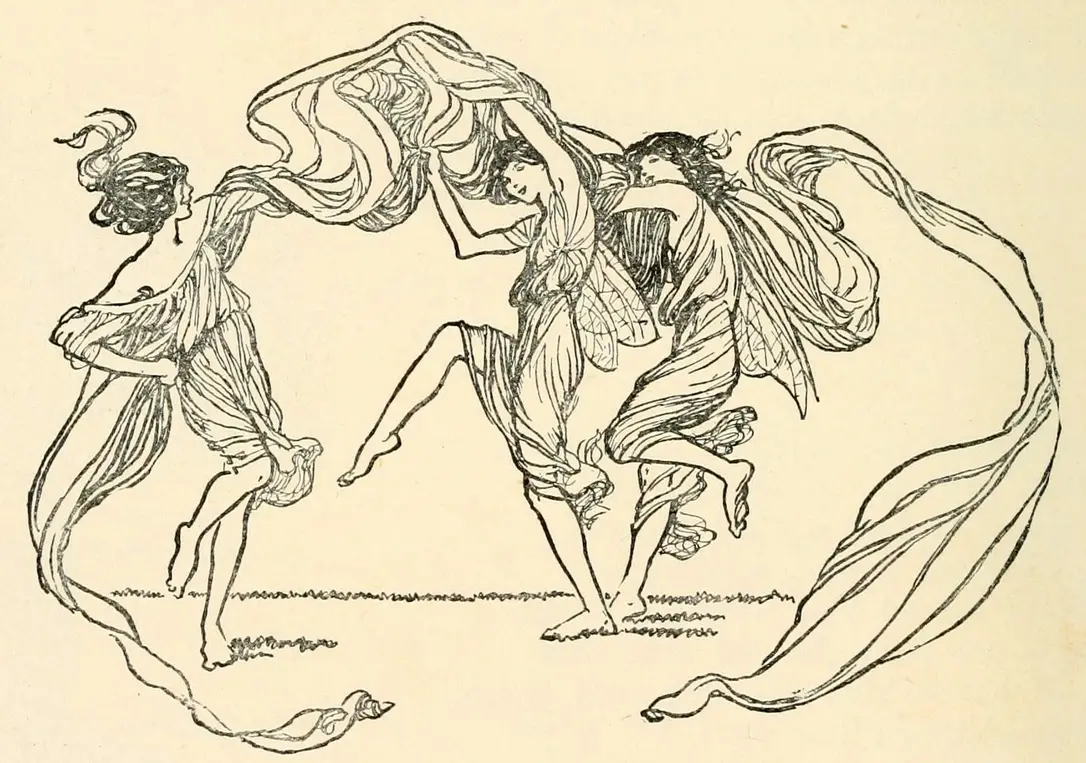
Arthur Conan Doyle’s 1922 book records that Kodak’s experts found no trick in the Cottingley fairy negatives in 1920, yet would not certify them as genuine.
Picture credit
"Dancing fairies, illustration by Claude A. Shepperson in Princess Mary's Gift Book (1914)" by Claude A. Shepperson — https://commons.wikimedia.org/wiki/File:Cottingley_fairies_illustration.jpg — Public domain (US: published in London in 1914, before January 1, 1931. EU: Claude A. Shepperson died in 1921 (life dates 1867-1921 on the Commons file page and in the image-rights review of 2026-11-05), more than 70 years ago. Scan chain: the Commons file gives as its source the Internet Archive scan princessmarysgif00mary (University of California Libraries, collection cdl, not a lending item; its metadata, read 2026-11-05, gives the date [1914] and the publisher Hodder & Stoughton). Page and poem checked in review on 2026-11-06 against the same scan: the _djvu.txt text and the scan page for printed p. 104 (leaf 130 in the item's page-number file) show the drawing below the last stanzas of Alfred Noyes, 'A Spell for a Fairy' (pp. 101-104), headed 'Painting and Drawings by Claude A. Shepperson, A.R.W.S.'; the contents page lists the poem under Noyes with the same credit. The IA item metadata was re-read the same day (collection cdl and americana, possible-copyright-status NOT_IN_COPYRIGHT, not a lending item).); modified: card and share image cropped by the site build to the card proportions; the article page shows the full drawing
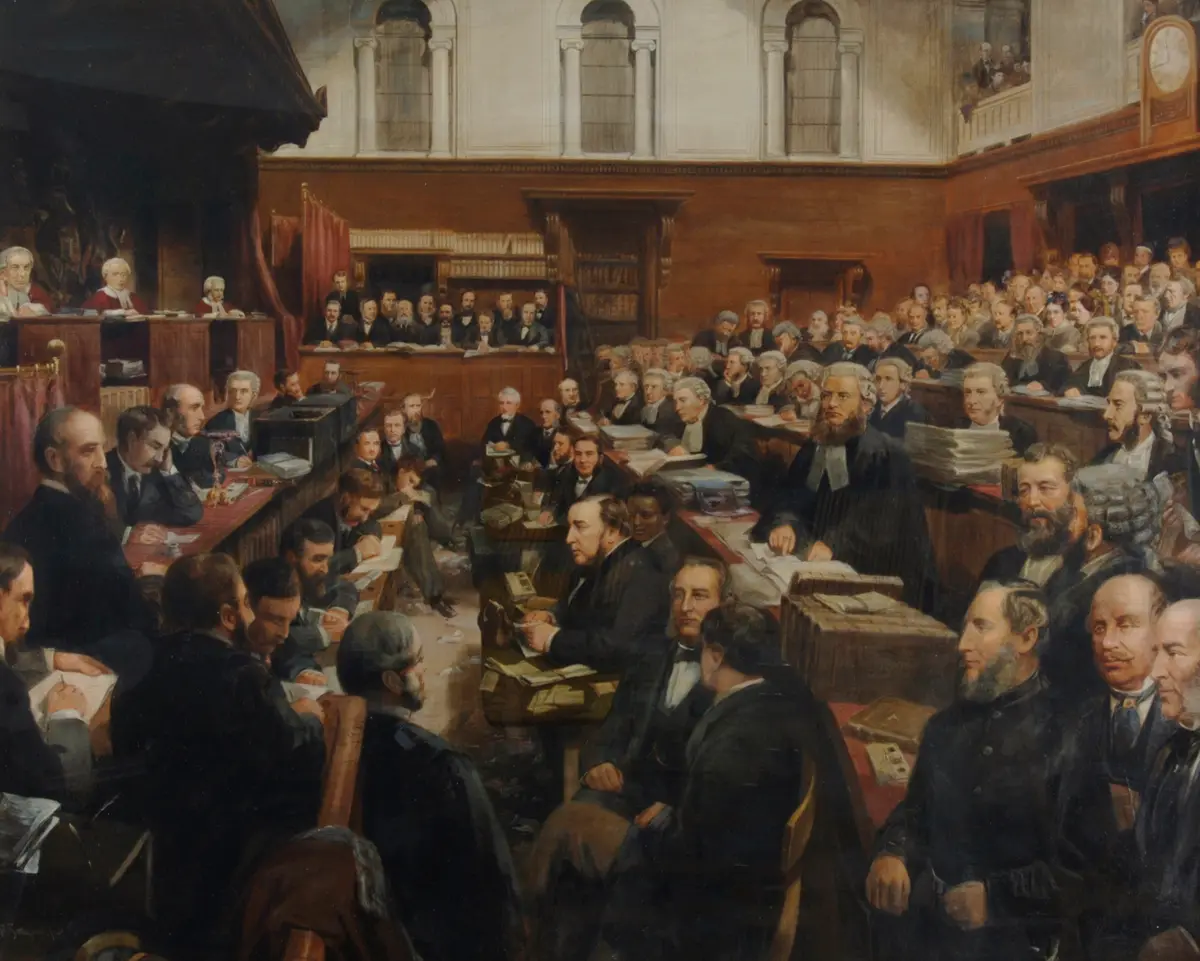
A London jury convicted the Tichborne Claimant of perjury in 1874; DNA tests published in 1995 exposed Anna Anderson, per a 2009 study. Two proofs compared.
Picture credit
"The Tichborne Trial, oil painting by Frederick Sargent (Hampshire County Council Museums Service, FA2005.237.1)" by Frederick Sargent — https://commons.wikimedia.org/wiki/File:The_Tichborne_Trial_by_Frederick_Sargent.jpg — Public domain (oil painting by Frederick Sargent (1837-1899, per the Commons creator record; not checked against another source): public domain in the EU (painter dead for more than 70 years) and in the US (author died before 1956, so even an unpublished work is out of copyright); the image is a faithful photographic reproduction of a two-dimensional public-domain work (PD-Art), which adds no new copyright in the US or in the EU (Directive (EU) 2019/790, Art. 14); marked Public Domain Mark 1.0 on Commons. Risk noted: the photograph came from Art UK for a UK collection, and a UK museum may claim rights in the reproduction; accepted in the image rights ruling of 2026-11-05 (log, image ruling 8).)
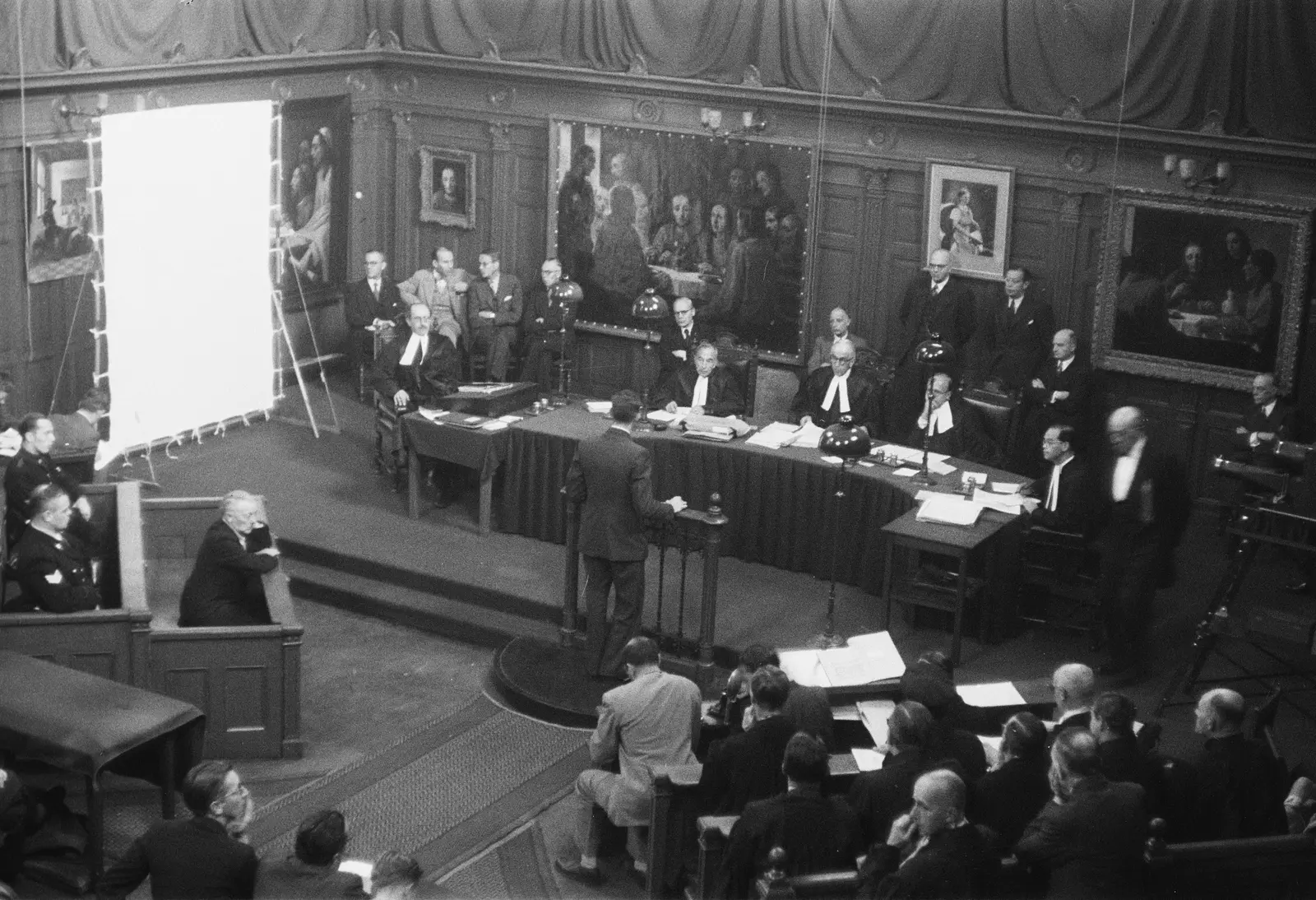
Han van Meegeren was arrested in 1945 as a suspected collaborator. By Godley’s 1951 account, he was tried in 1947 for forging signatures and got one year.
Picture credit
"Proces Van Meegeren" by Harry Sagers / Anefo, Nationaal Archief — https://commons.wikimedia.org/wiki/File:Proces_Van_Meegeren,_Bestanddeelnr_902-4286.jpg — CC0 1.0 (https://creativecommons.org/publicdomain/zero/1.0/)
Count this visit?
With your permission, this site uses Google Analytics, which sets cookies, to count visits. Cloudflare Web Analytics, which sets no cookies, counts visits either way. There are no ads. Data protection
 Illustration